A quiz is a step-by-step survey: one question per screen, then a result and a contact field. A regular form shows every field at once. A quiz moves one step at a time and can change the next question based on the answer.
How a quiz differs from a test, a survey, and a form
| Quiz | Test | Survey | Form | |
|---|---|---|---|---|
| Purpose | Match an offer and collect a contact | Score knowledge | Collect opinions | Collect a submission |
| Structure | 4–6 questions, each on its own screen | Questions with a correct answer | A questionnaire, often on one page | Fields on one or several pages |
| Ending | A result and a lead | A score | Answers, no reward | The data is sent |
A quiz works as a trivia game and as a product finder. A short question is easier to answer than a long form. At the end the visitor sees their own result — a discount, a plan, a package — and leaves a contact with a clear next step. Sales receives the answers, not an empty “call me back”.
Two things keep people going:
- many want to reach the result, the same way they finish a test;
- a quiz left in the middle feels unfinished.
How to write the questions
Say why the quiz is worth taking: get a price, get a shortlist, claim a discount. Without that, the visitor does not know what the last screen is for.
A working quiz is four to six questions, one question per step:
- A start screen: the offer, an image, and a Take the quiz button.
- One question per screen.
- A last step: the contact field and the bonus promised at the start.
A taxi example: who is riding, car class, route, then a discount on the trip. “Business” opens one set of questions, “economy” opens another. The quiz does not ask what it already knows.
Keep questions short. Add a hint when a term needs one. Answers can be text, an image, or text with an image. Use images of the same width and height. Include an “I don’t know” or “not sure” option so people are not stuck when none of the choices fit. Avoid free text, date pickers, and file uploads on the early steps. Those can be optional fields closer to the lead form.
Mistakes that make people quit
- Not splitting customer types in the first question, so everyone sees the same path.
- Asking people to type long text and numbers.
- Asking them to pick a date from a calendar.
- Requiring a project file. If you need the file, make the field optional.
- Using dropdowns and tiny options that are hard to tap on a phone.
- Leaving out an “I don’t know” answer.
- Using terms with no hint.
- Asking more than six questions.
- Not saying why the question is there. Use the field hint.
- Putting more than one question on a step.
- Forgetting the bonus on the last step. Tie the discount to the phone or email collected there.
How to create a quiz in FormDesigner
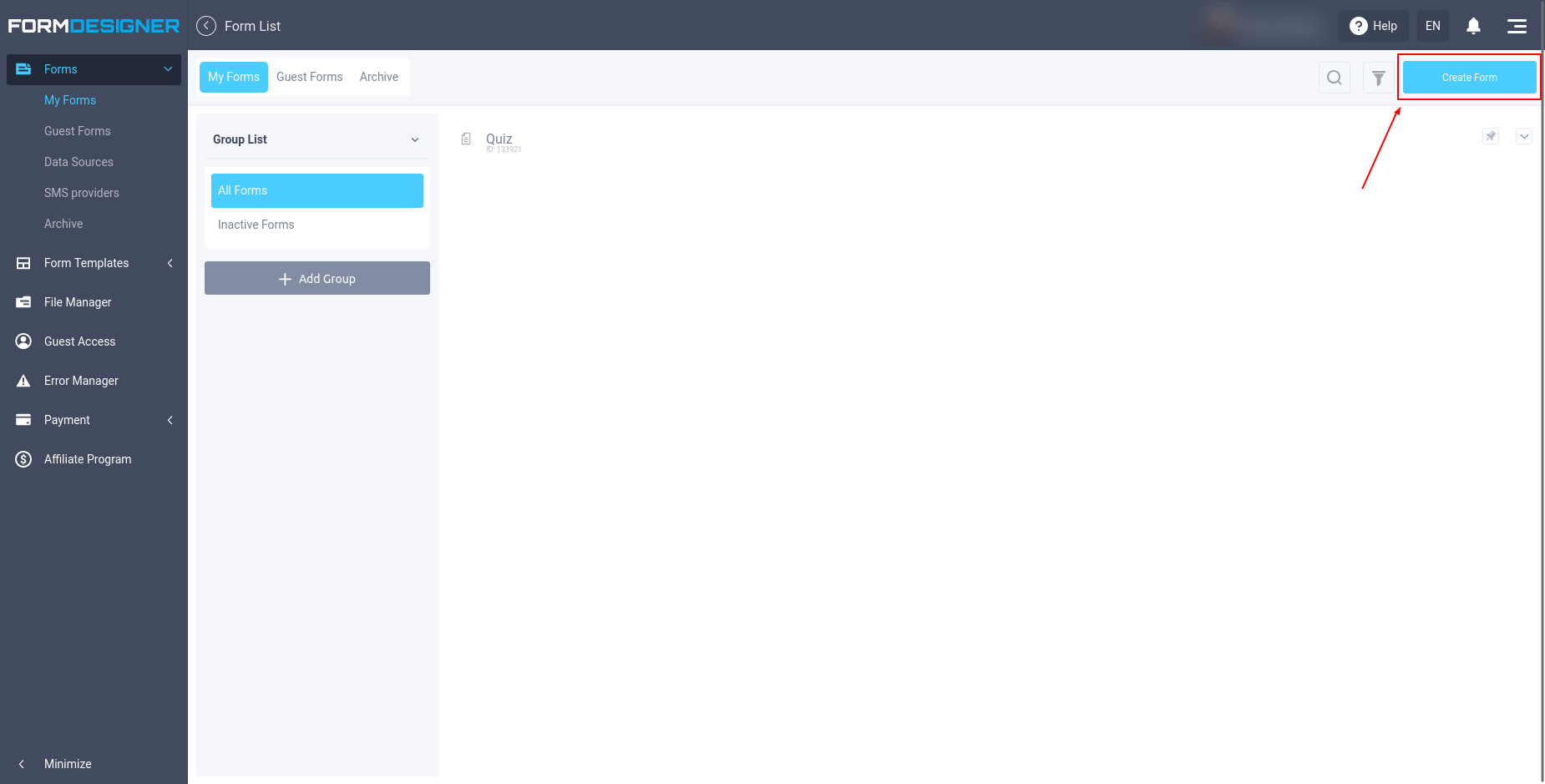
Open the form list and click Create Form.
On the template page, choose Quiz on the left.
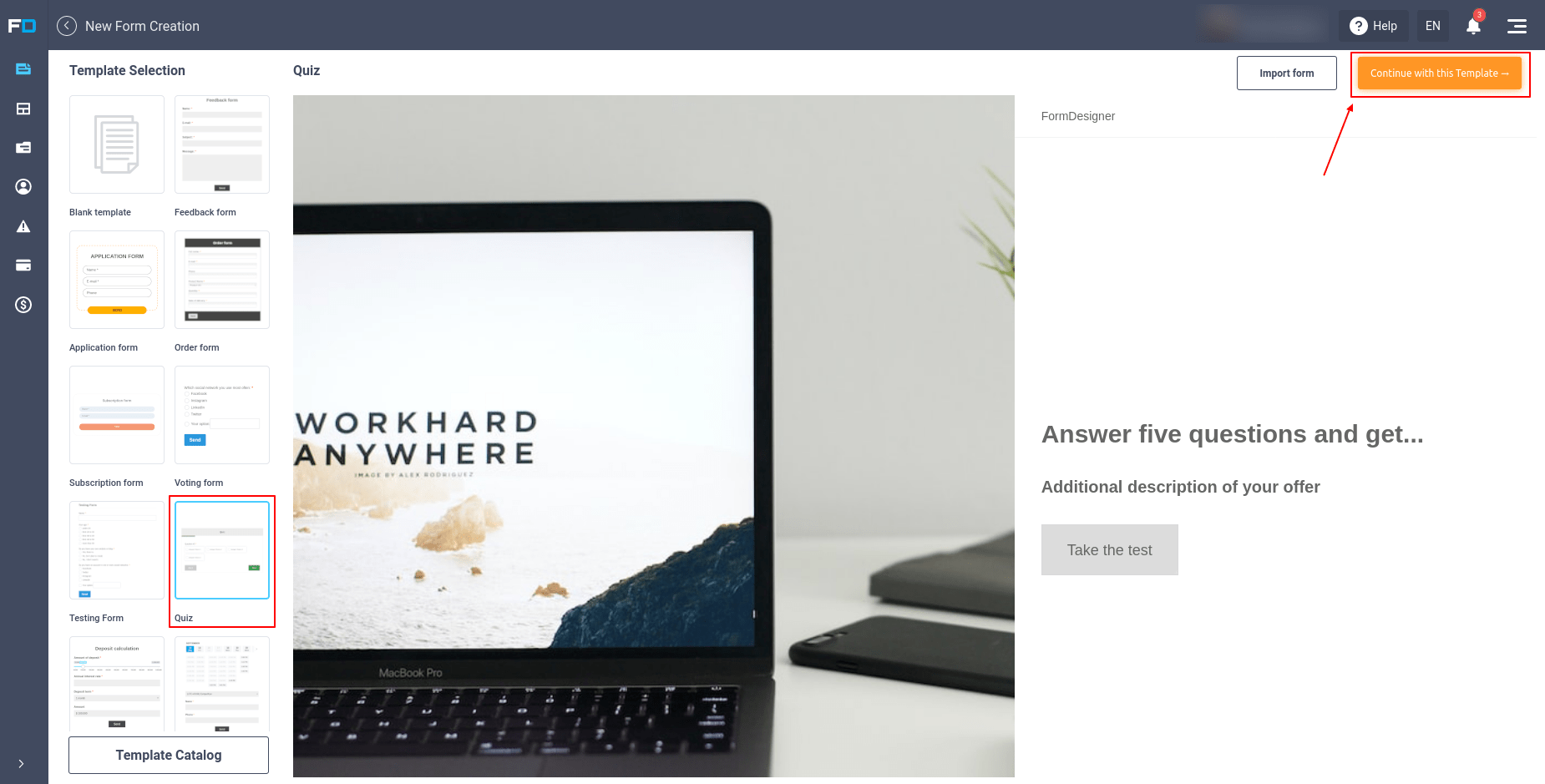
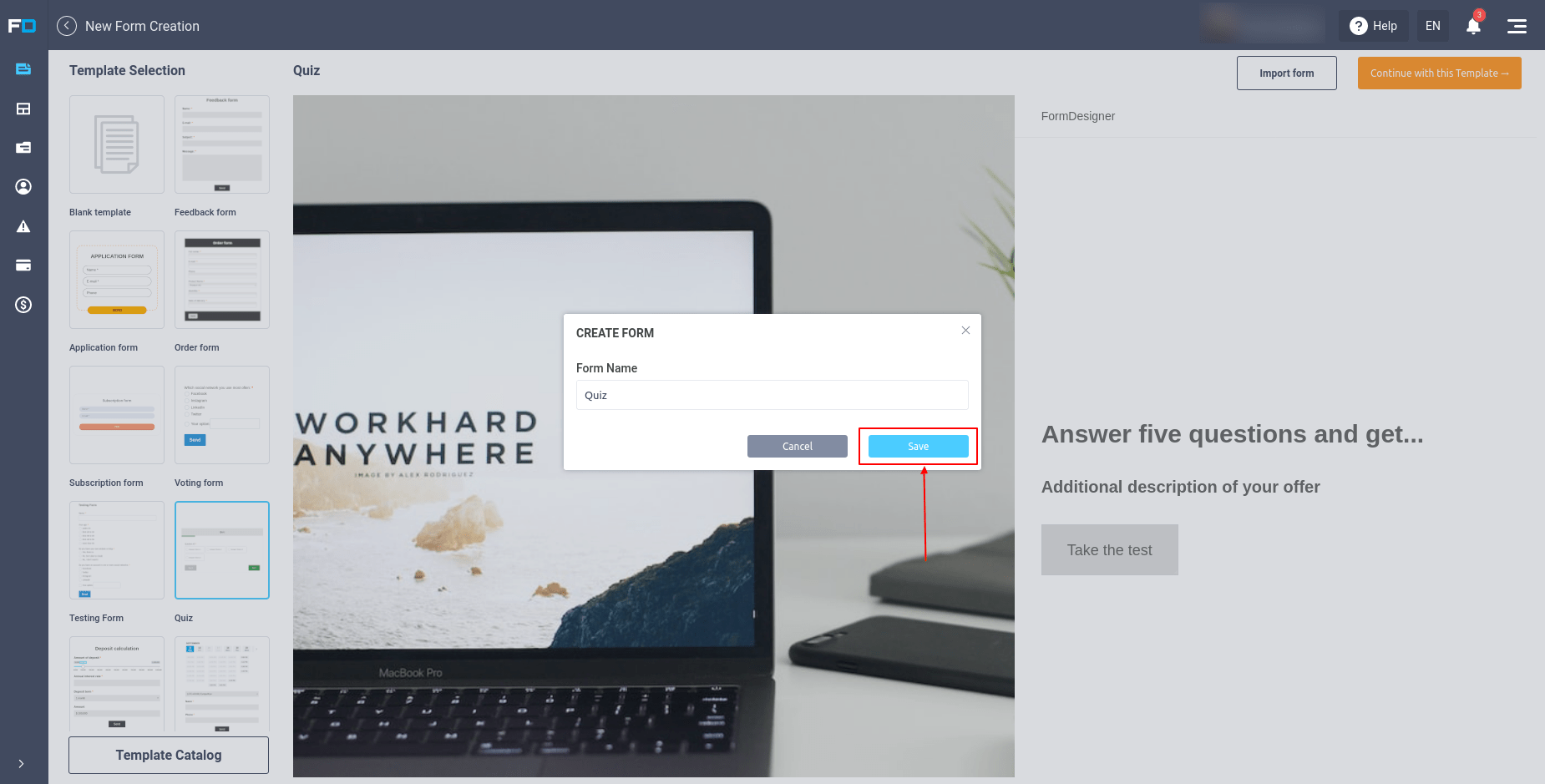
Then click Continue with this template. Enter a name and click Save.
The editor opens with pages and questions already in the template. Edit or delete them.
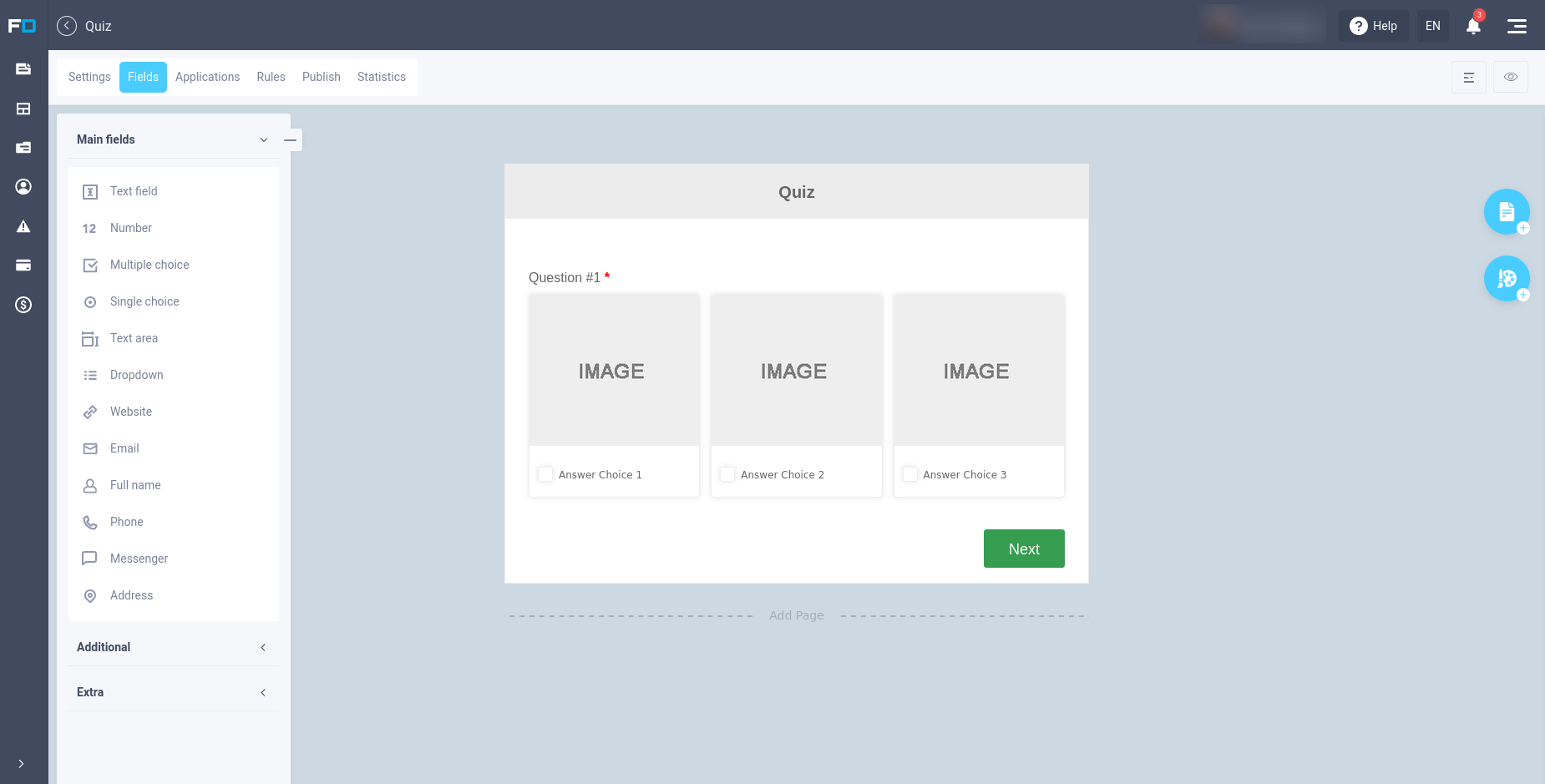
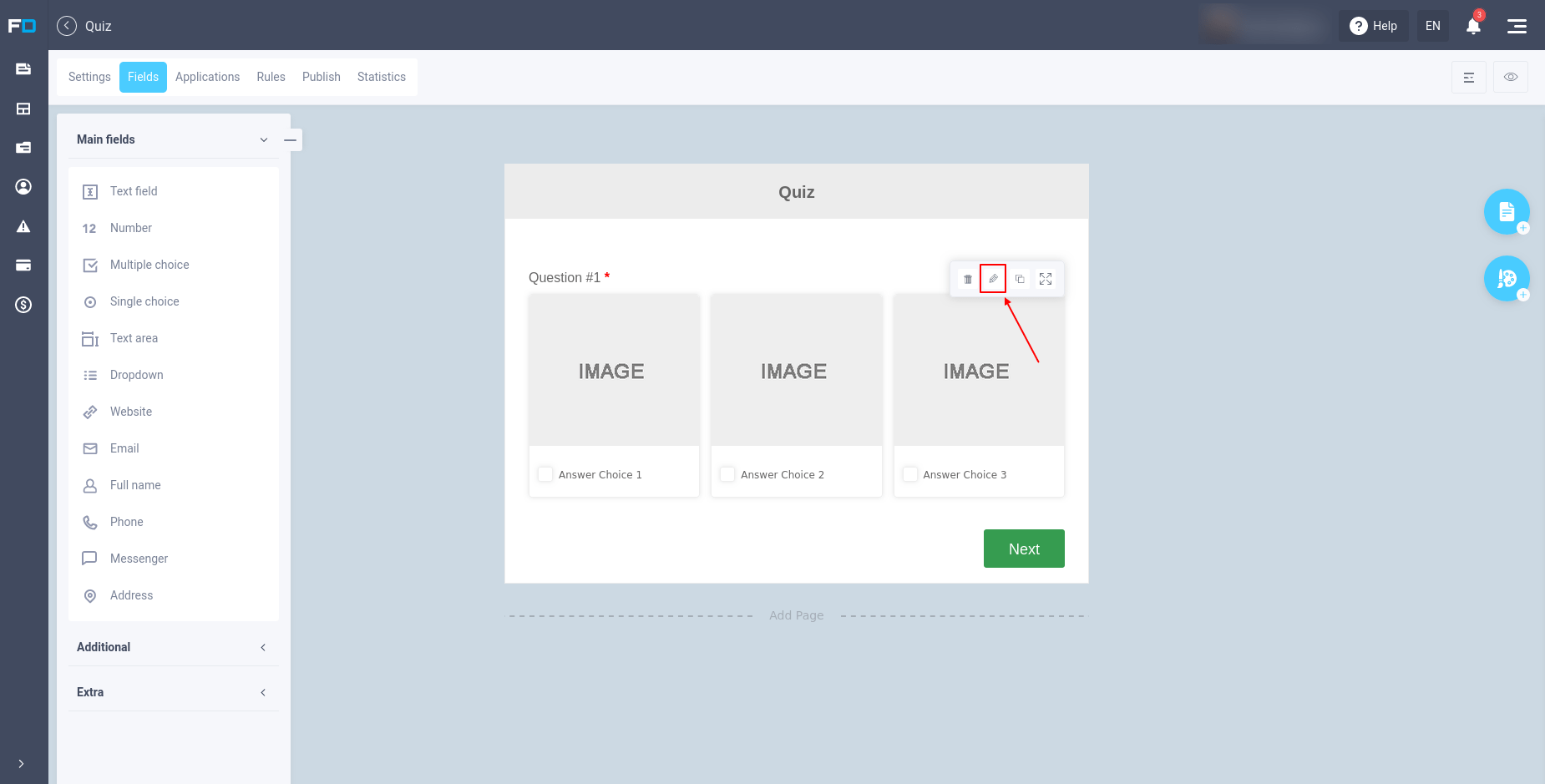
Drag an element from the left menu onto the form to add a question. Hover the question and open the edit icon to change the wording and the answers.
In the element window, set the label, the description, and whether the field is required. Answer choices can sit in one column or several.
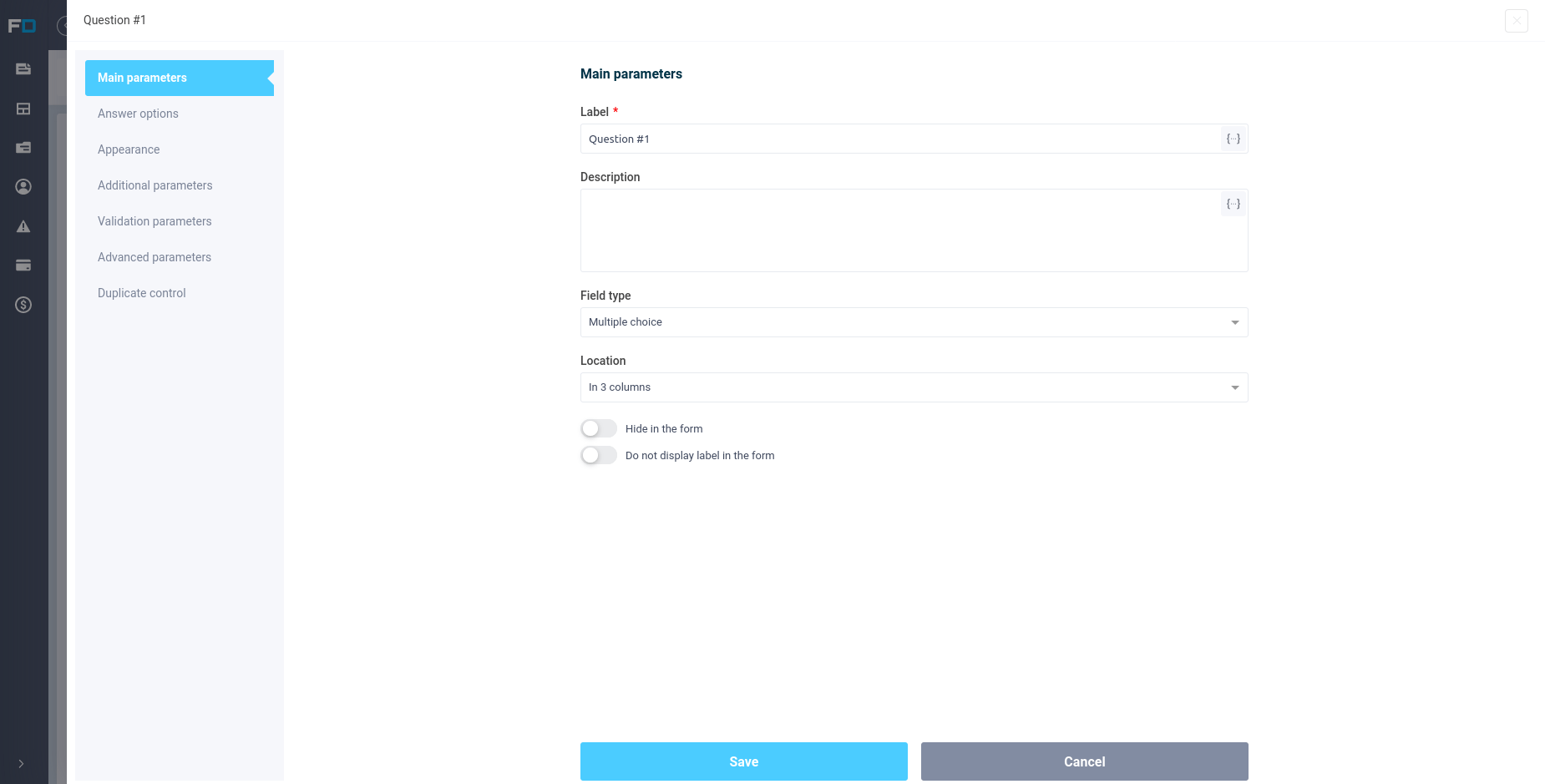
Under Answer Choices, add an image to an option with the image icon or the plus sign. Use images of the same width and height.
Pages
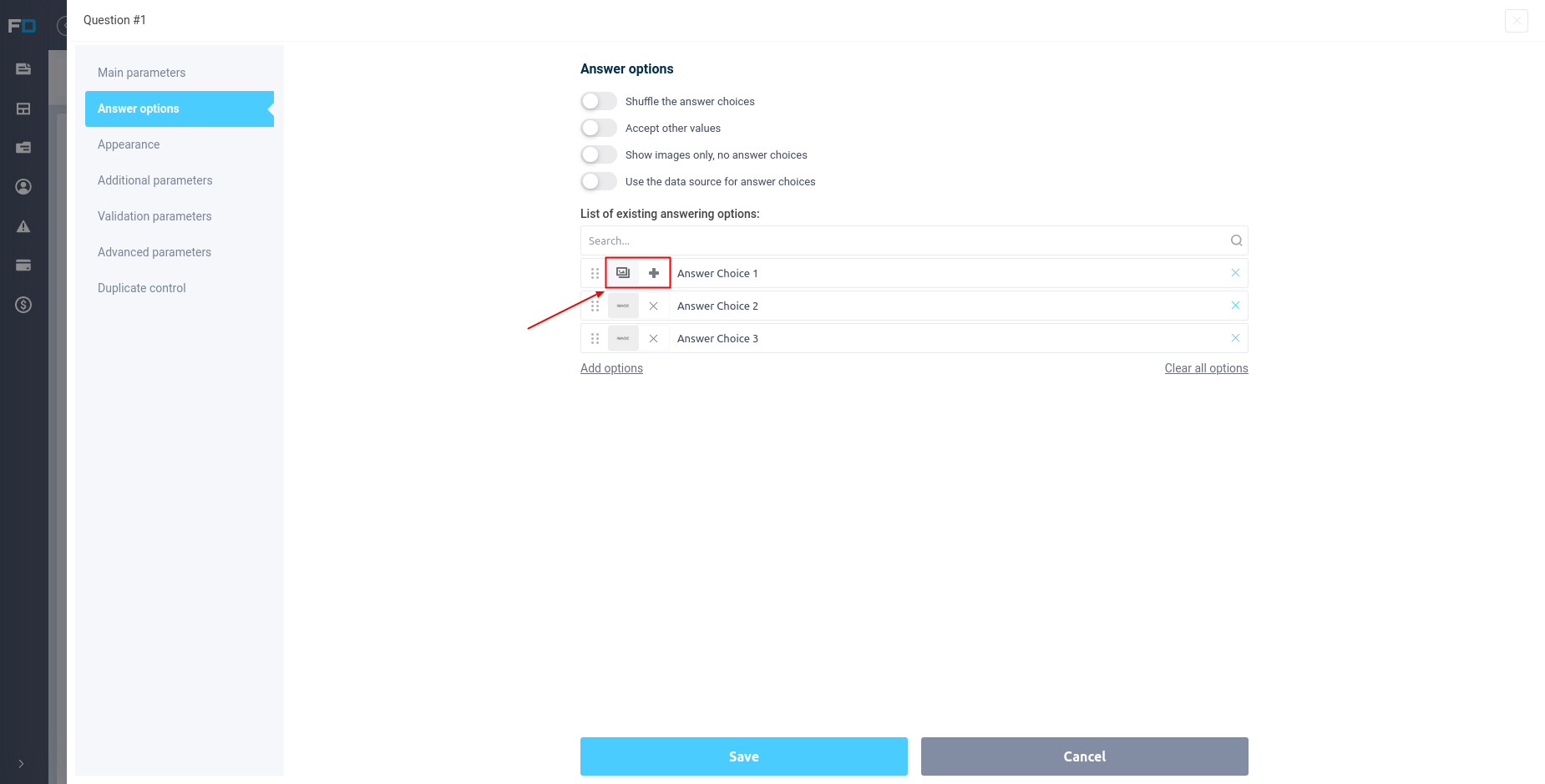
Give each question its own page. Open the page list from its icon.
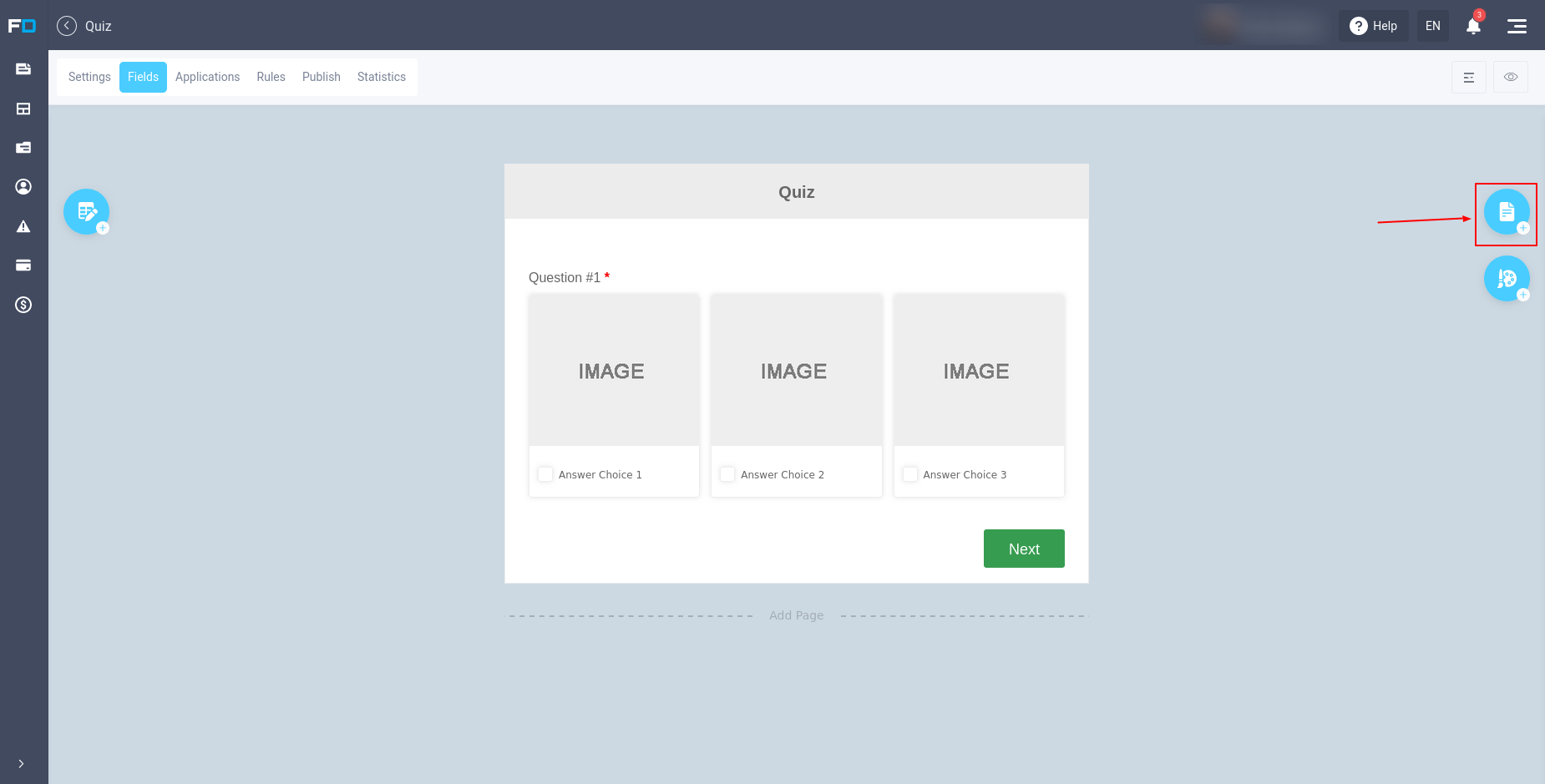
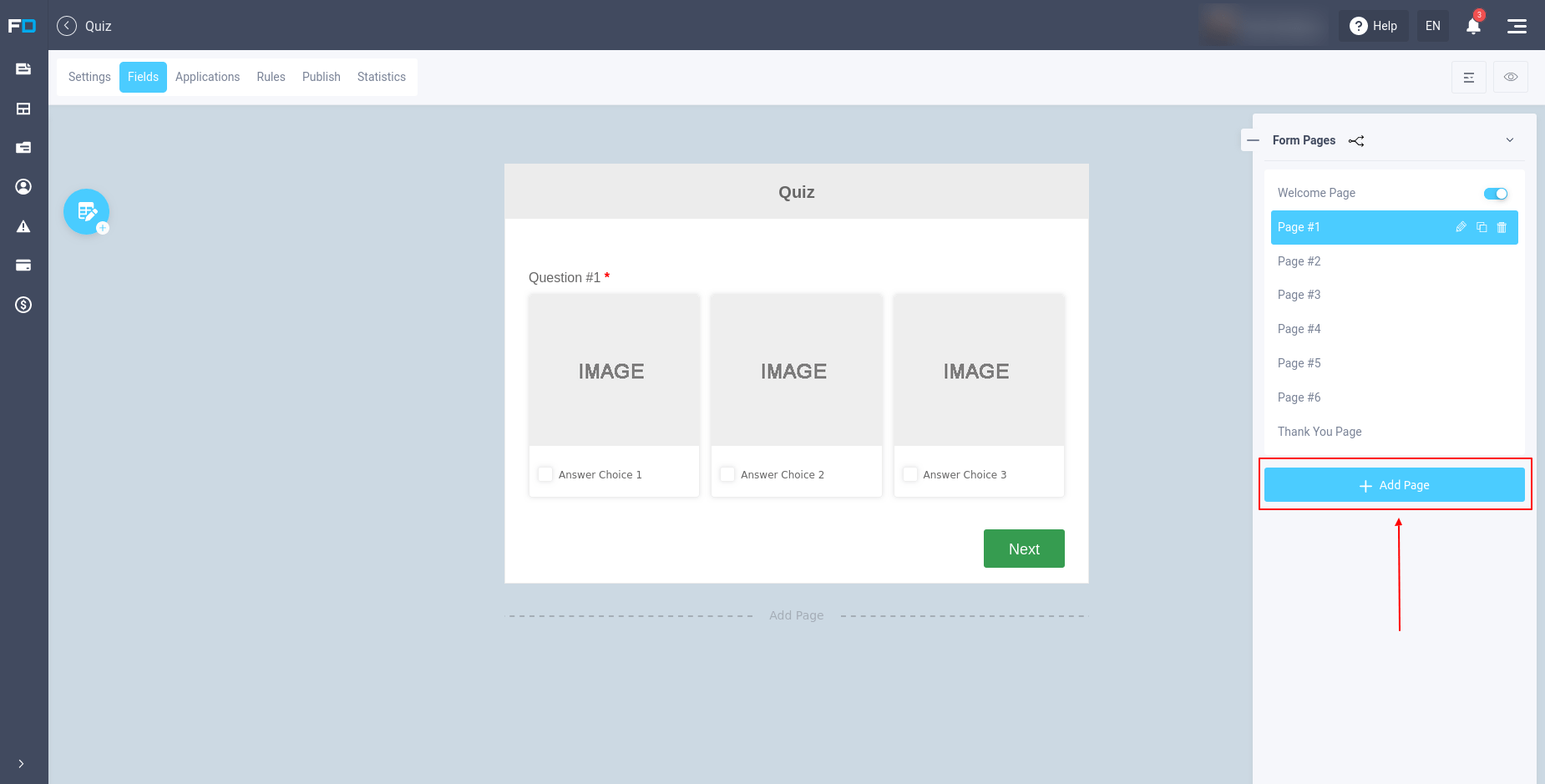
Add Page puts a new page at the end of the list. Rename, delete, or copy a page with its fields.
Progress
A progress indicator shows how many questions are already done.
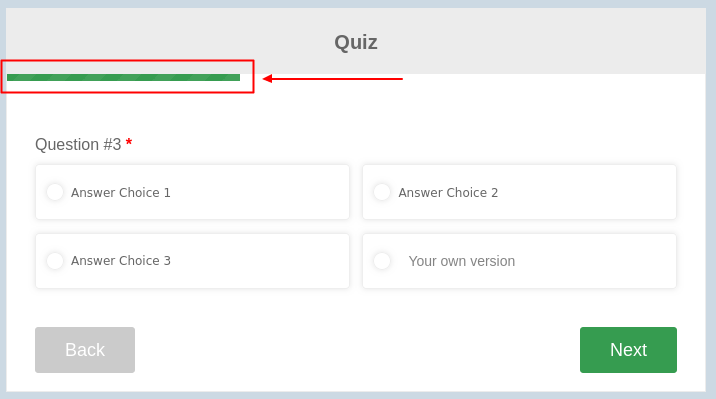
Turn it on in the page settings.
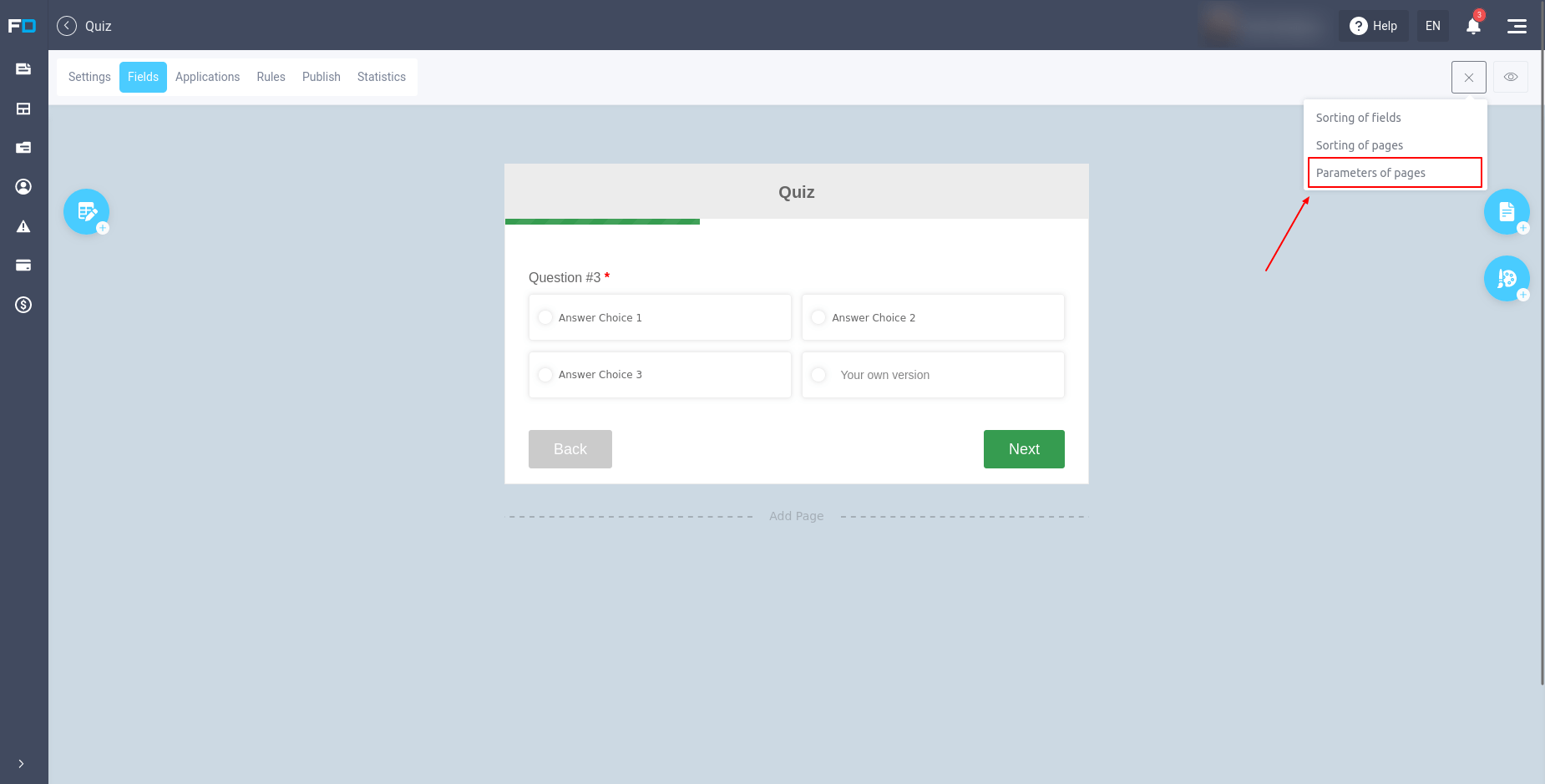
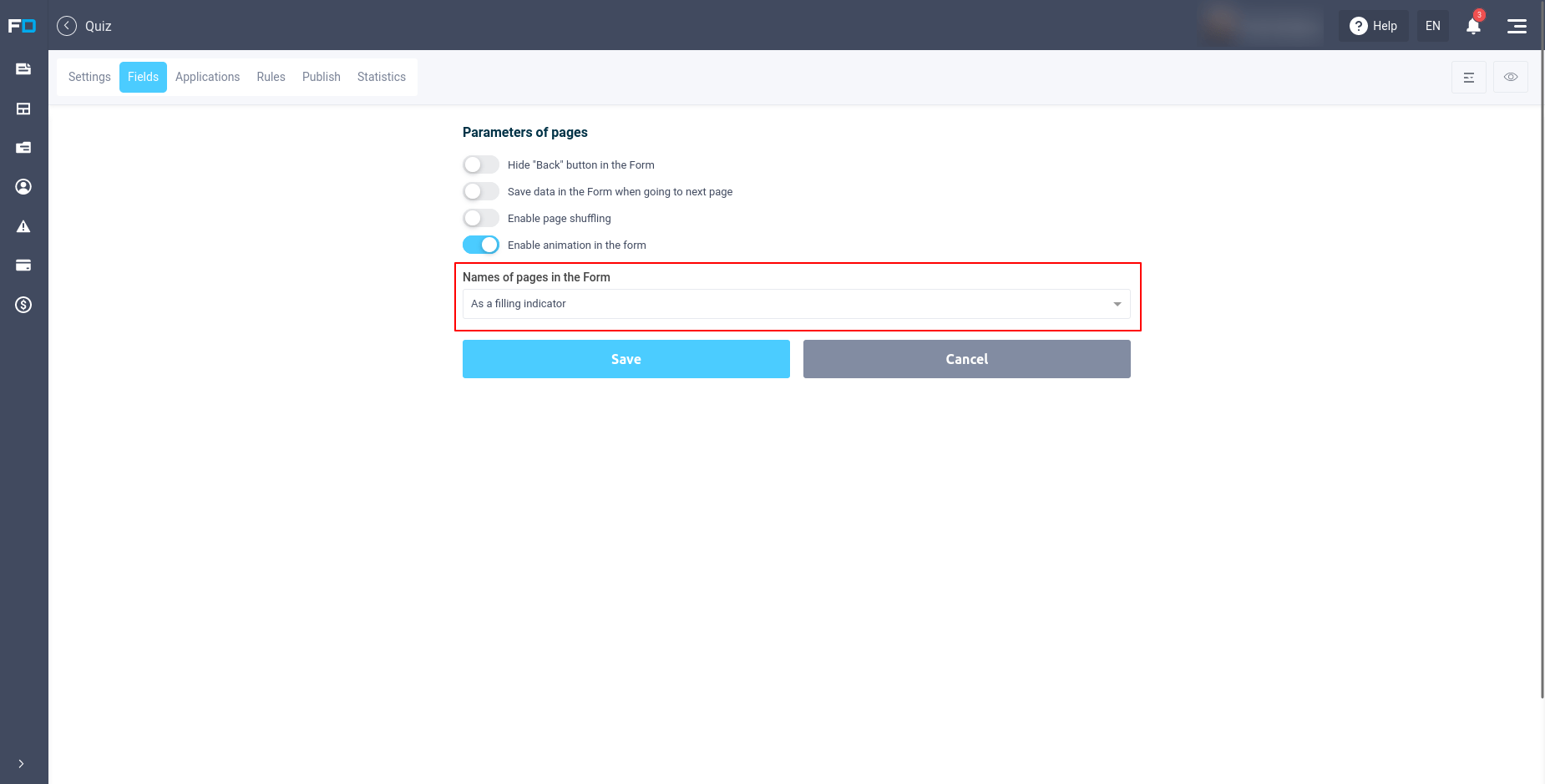
Page names are shown as a fill indicator. The same screen hides the Back button and turns on page shuffle and animation. The switch Save data in the form, when going to the next page stores answers on every step. They show up in statistics even if the visitor never finishes.
Welcome page
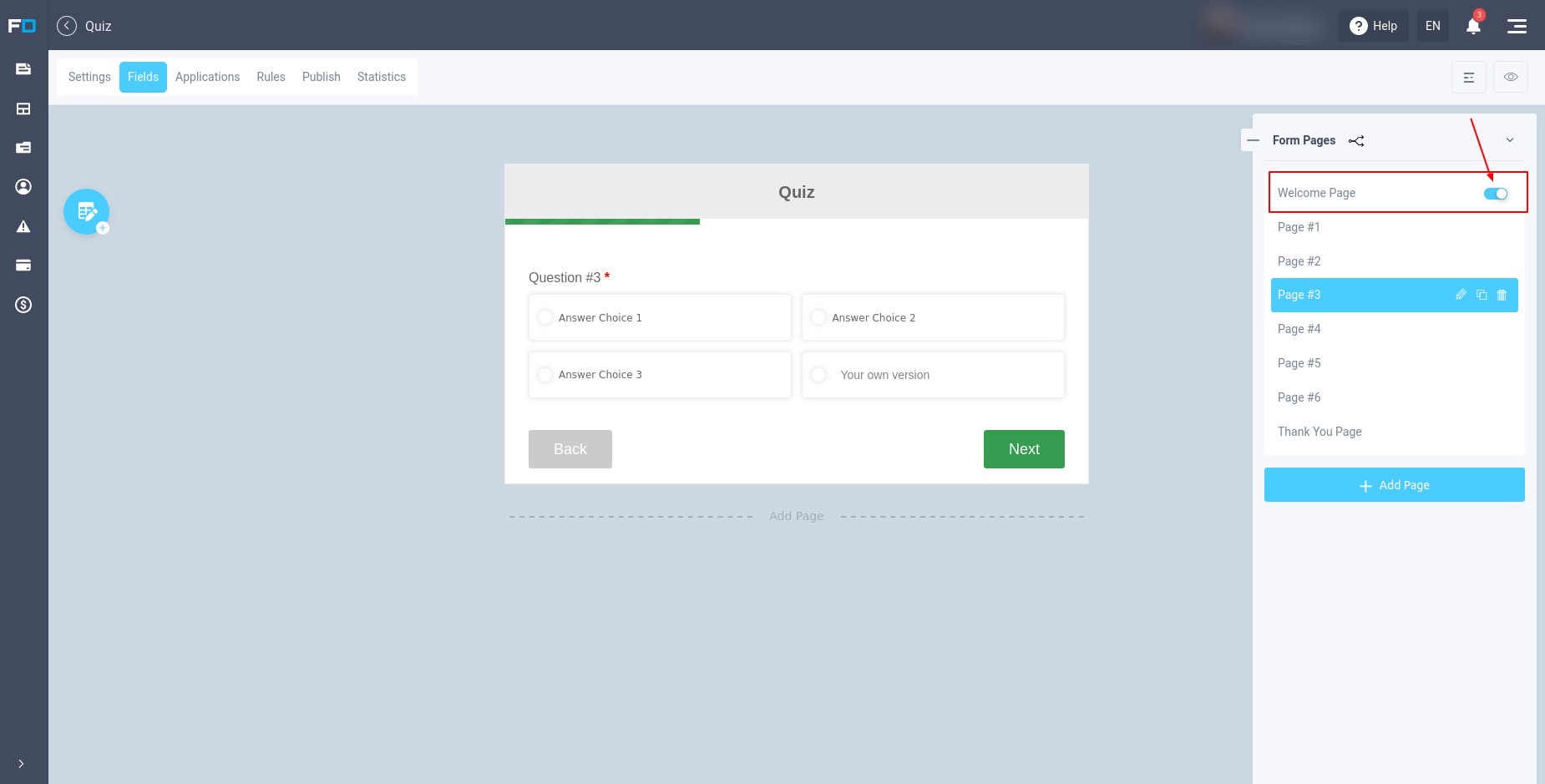
The welcome page is the first screen: the promise, an image, a short text, and a Take the quiz button.
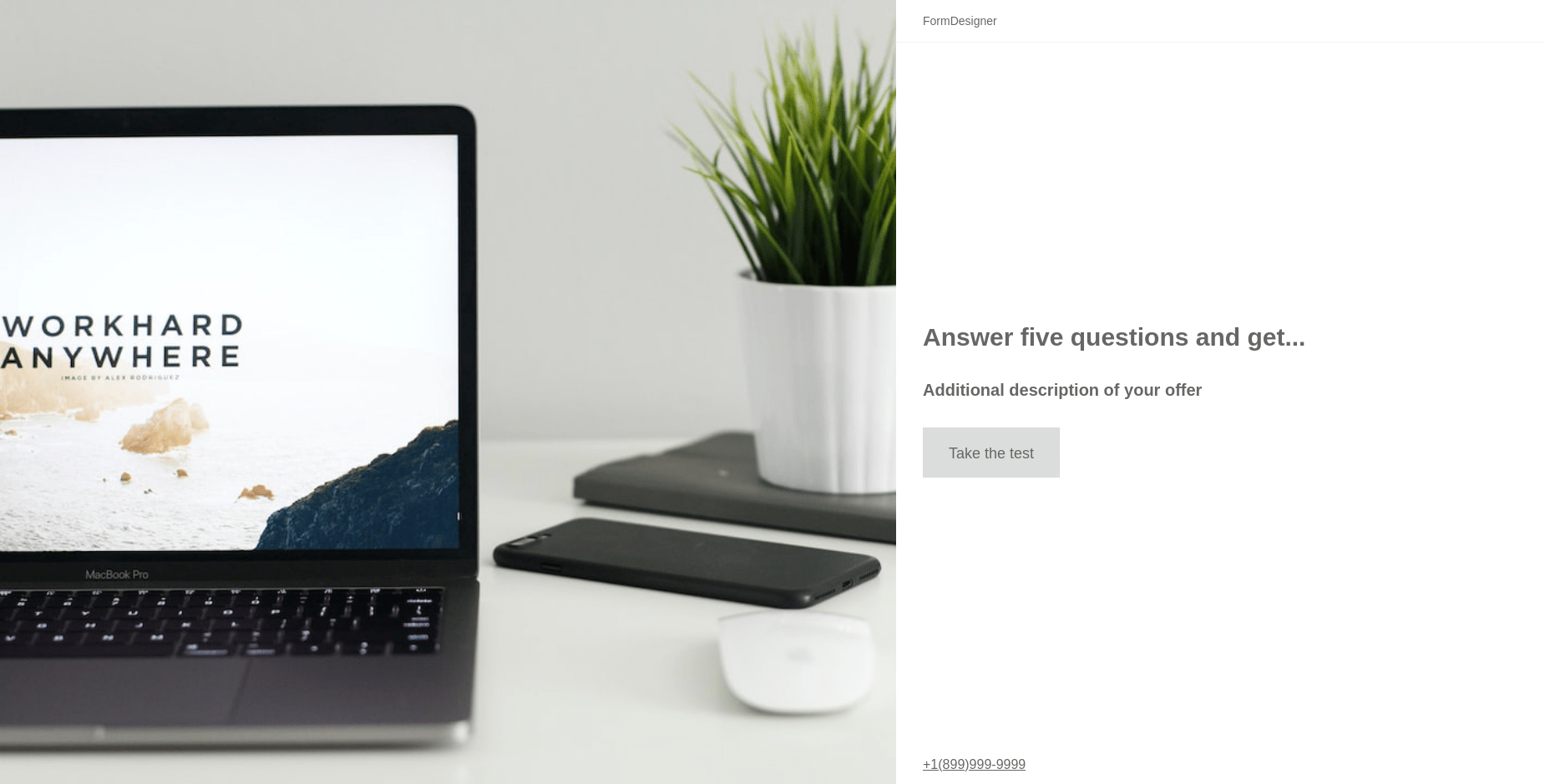
Turn it on with the switch in the page list. Edit the text and the image with the icons on that page.
Branching
Different answers can open different next questions. From the page list, open the branching editor.
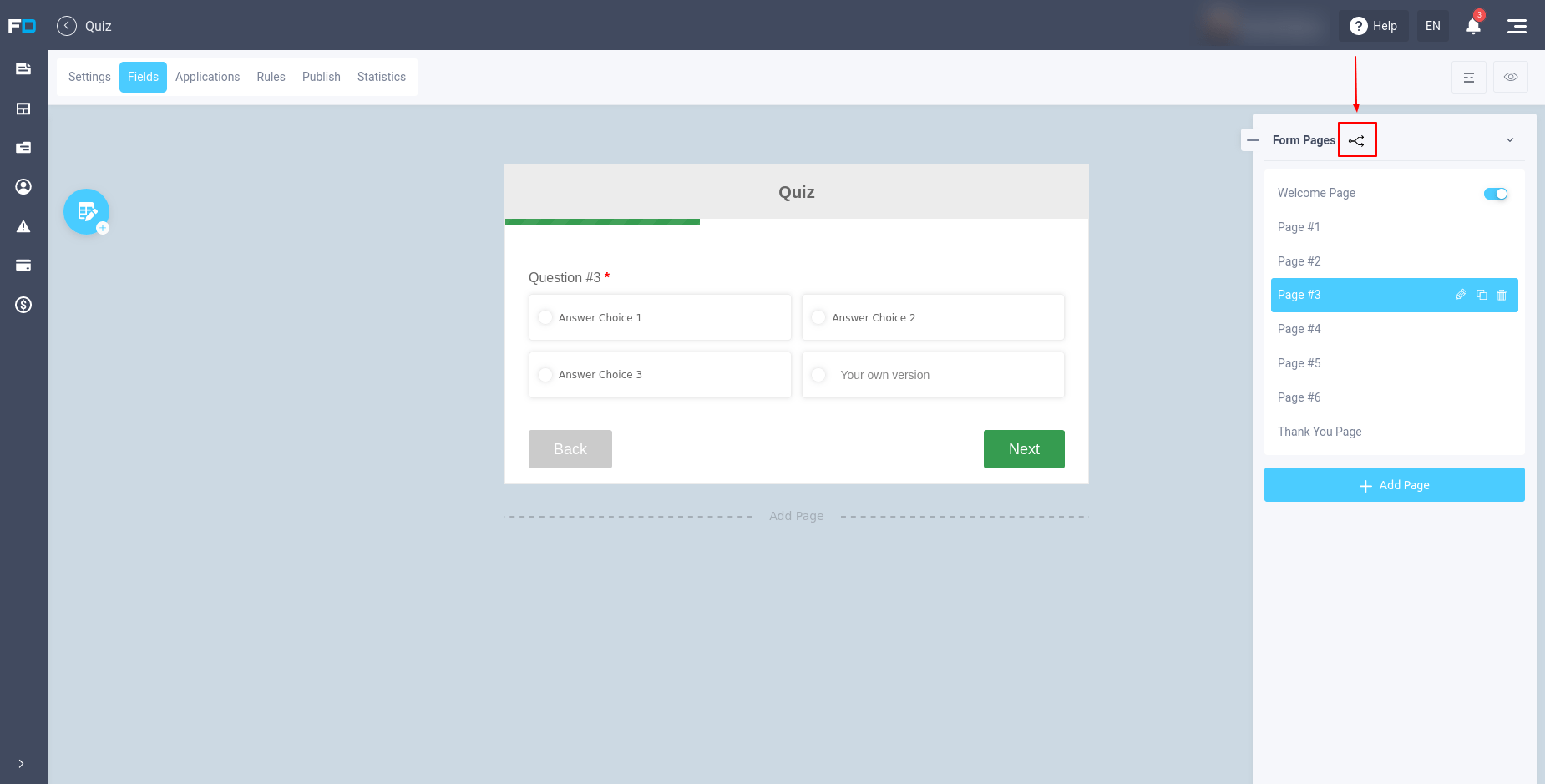
Connect pages with conditions. You set the path by dragging, without code.
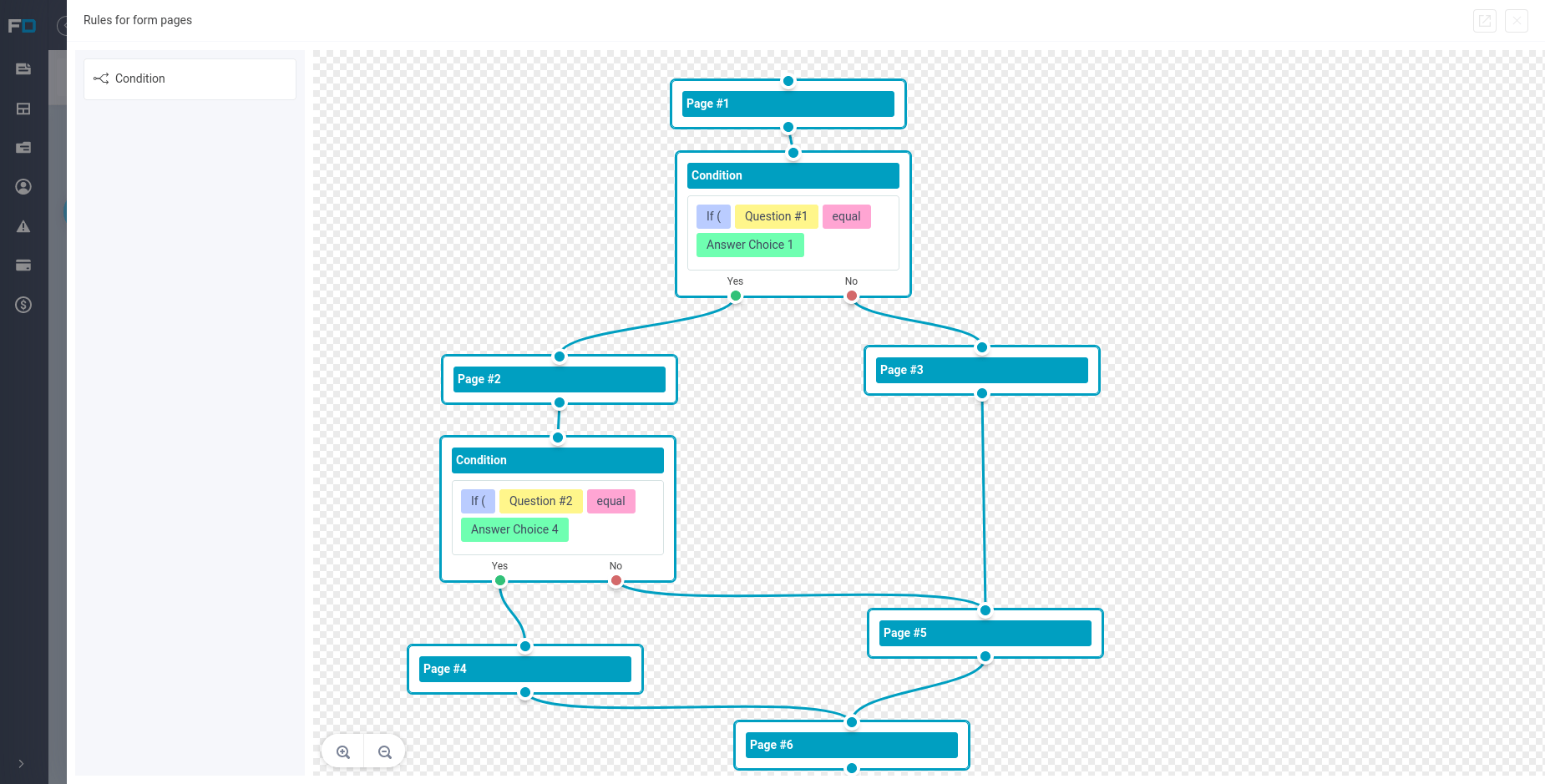
Appearance
Appearance is on the Fields tab.
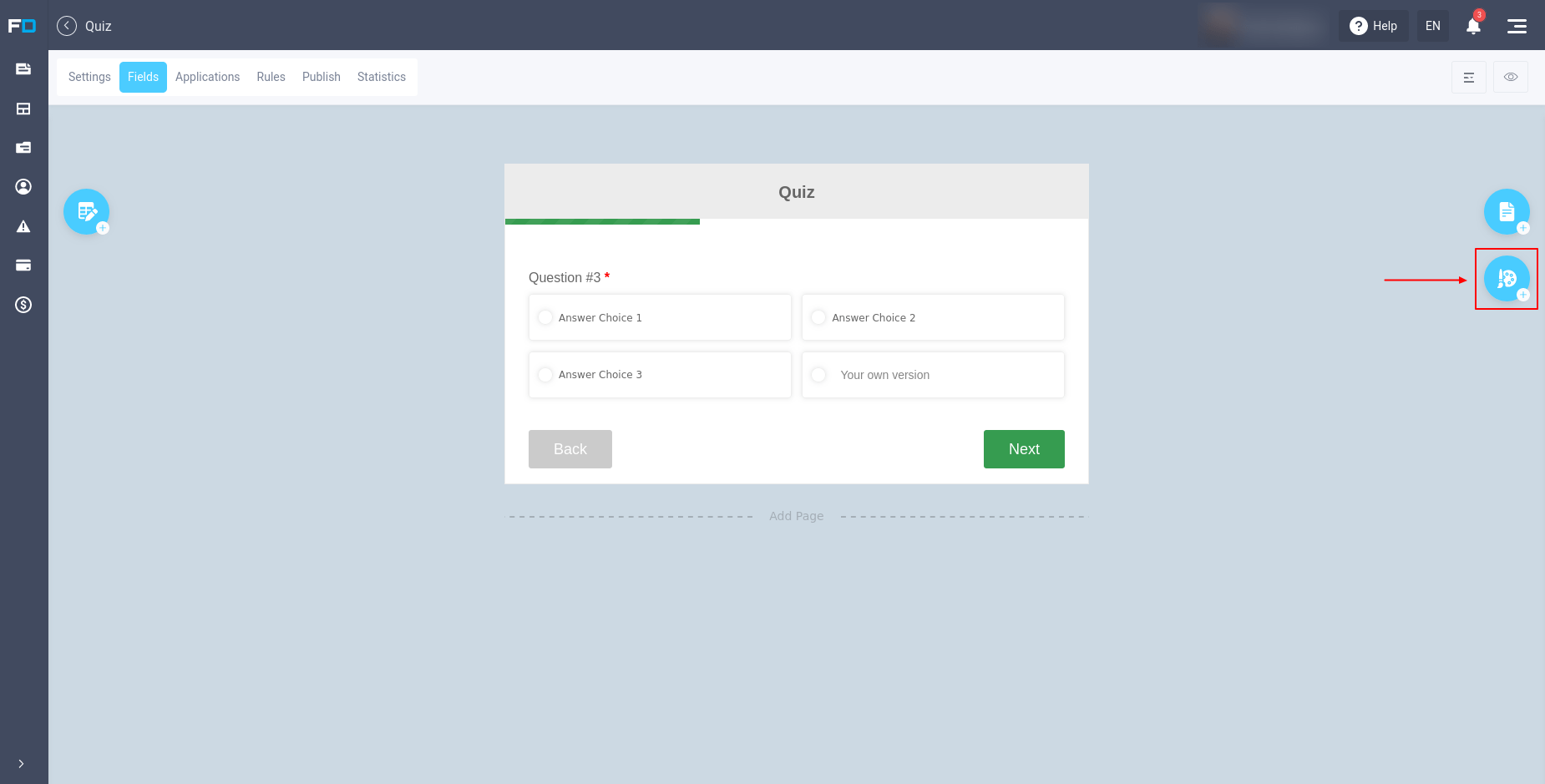
Pick a theme.
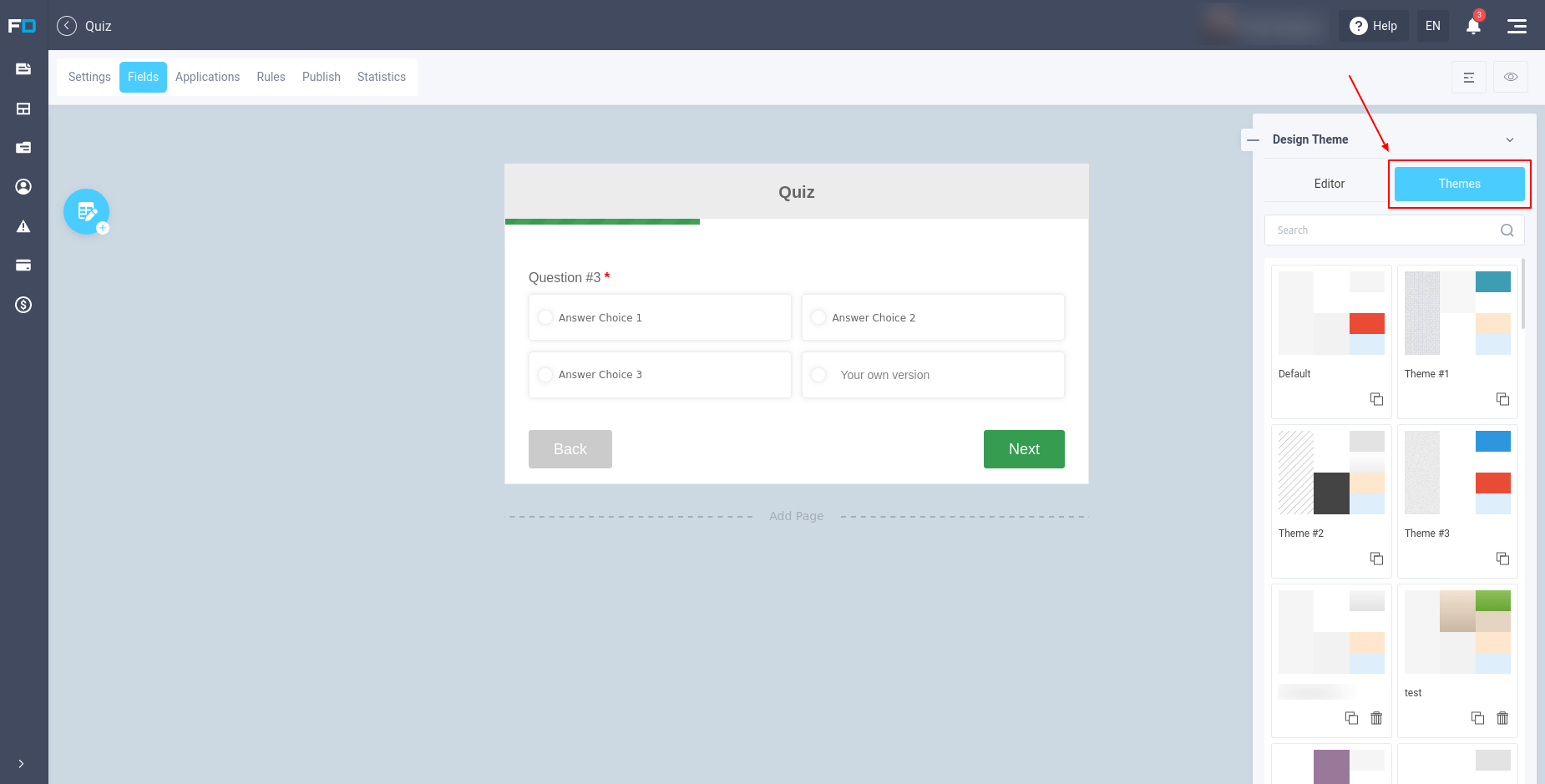
Copy it before you change the background, font, border, or shadow, so the original theme stays intact.
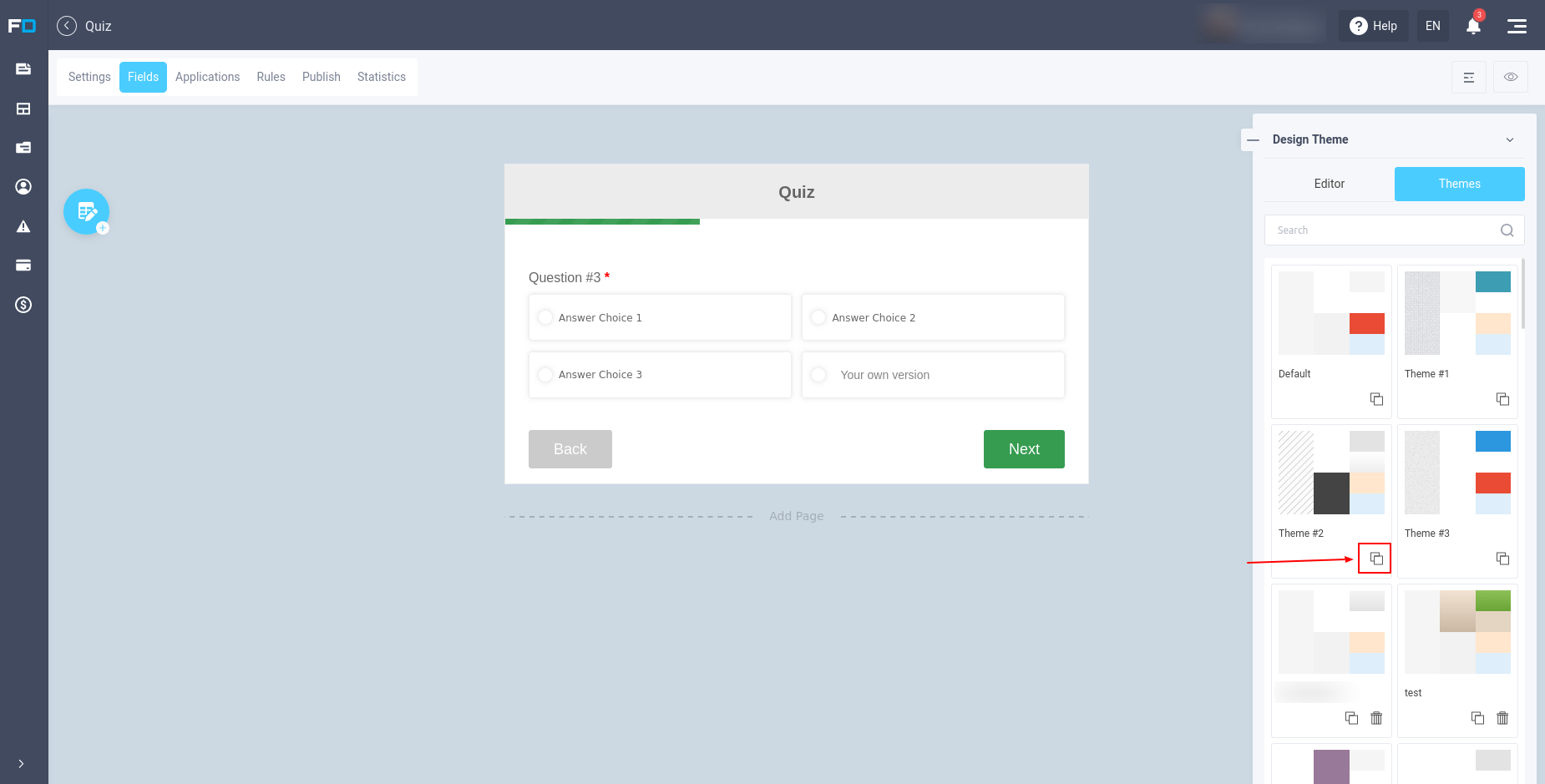
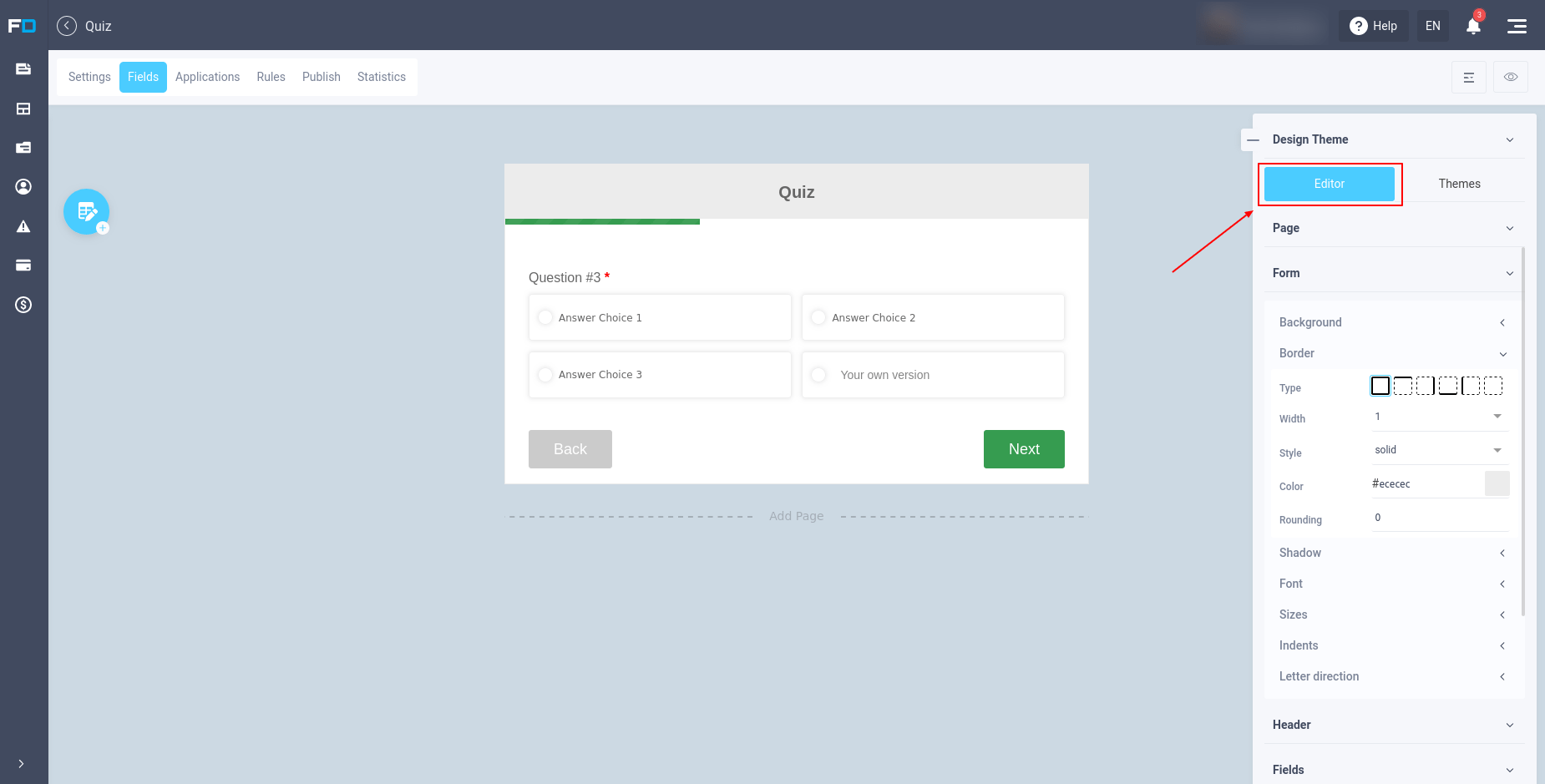
Edit the copy, not the original theme.
The result
The text after the last answer lives on the Thank you page in the page list.
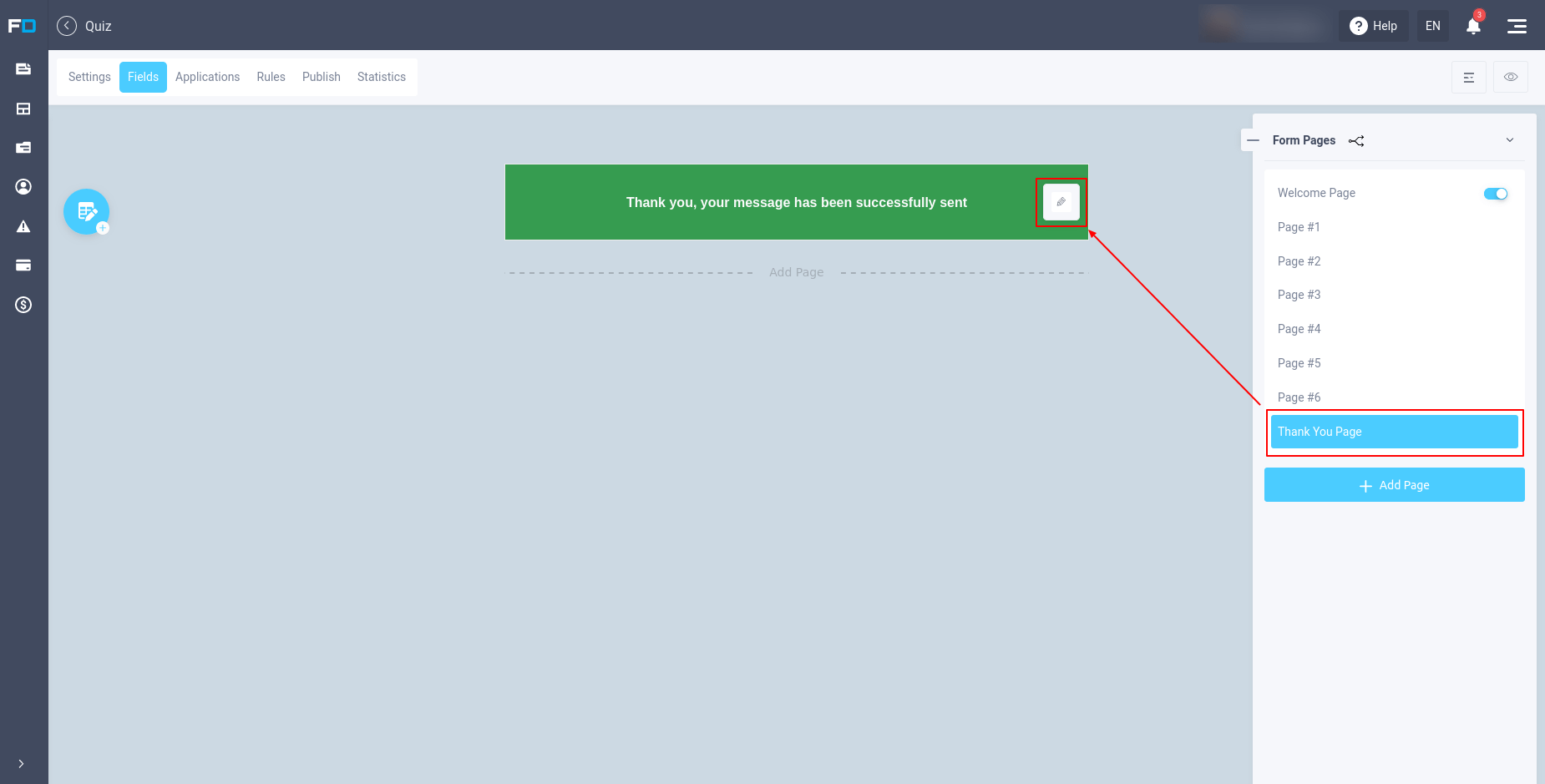
For a quiz, choose Show text on a separate page: the form hides and only the result remains. Other actions on that page: show text over the form, show text below the form, redirect to another URL, show the results of the form, send data to print.
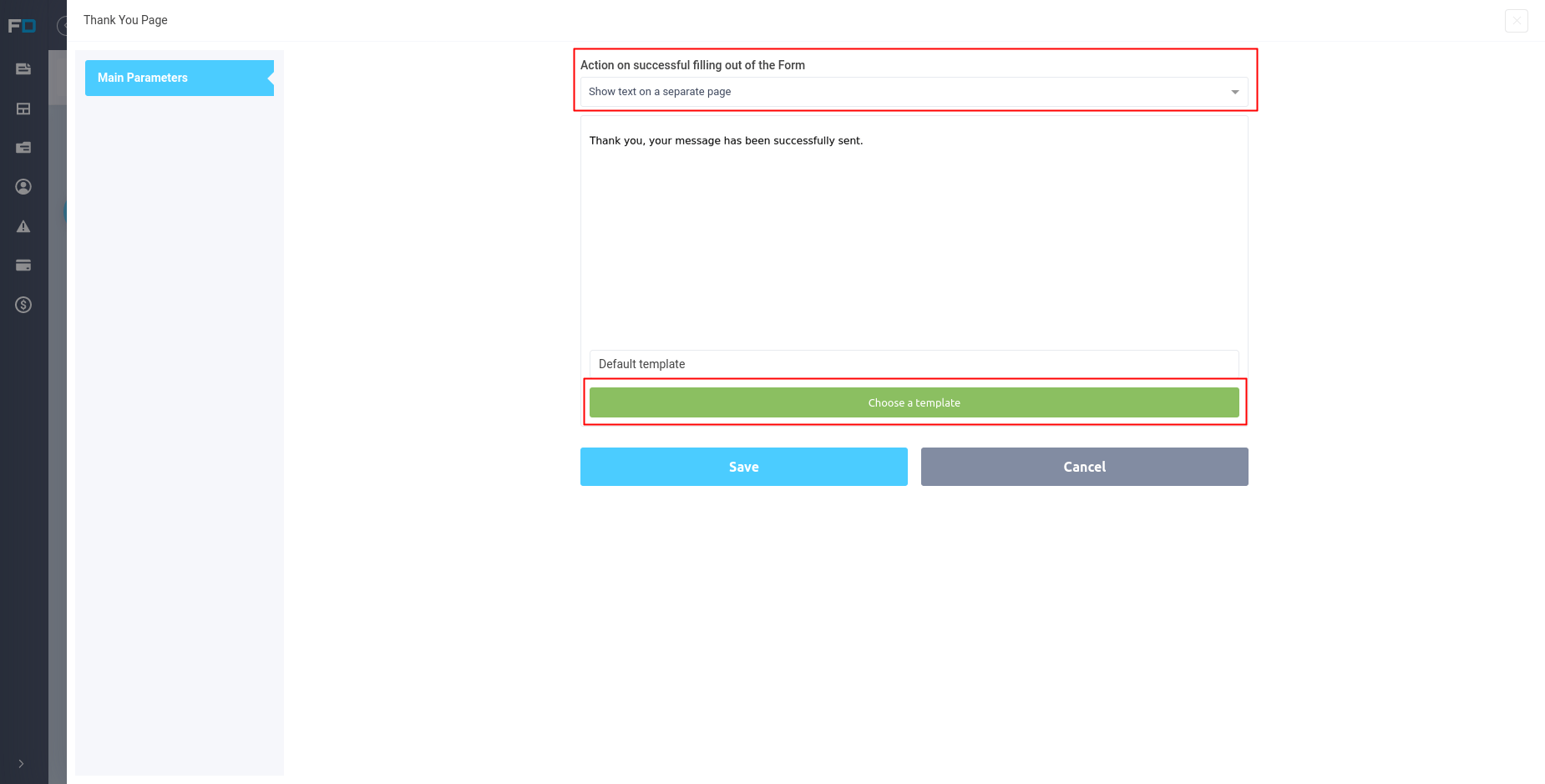
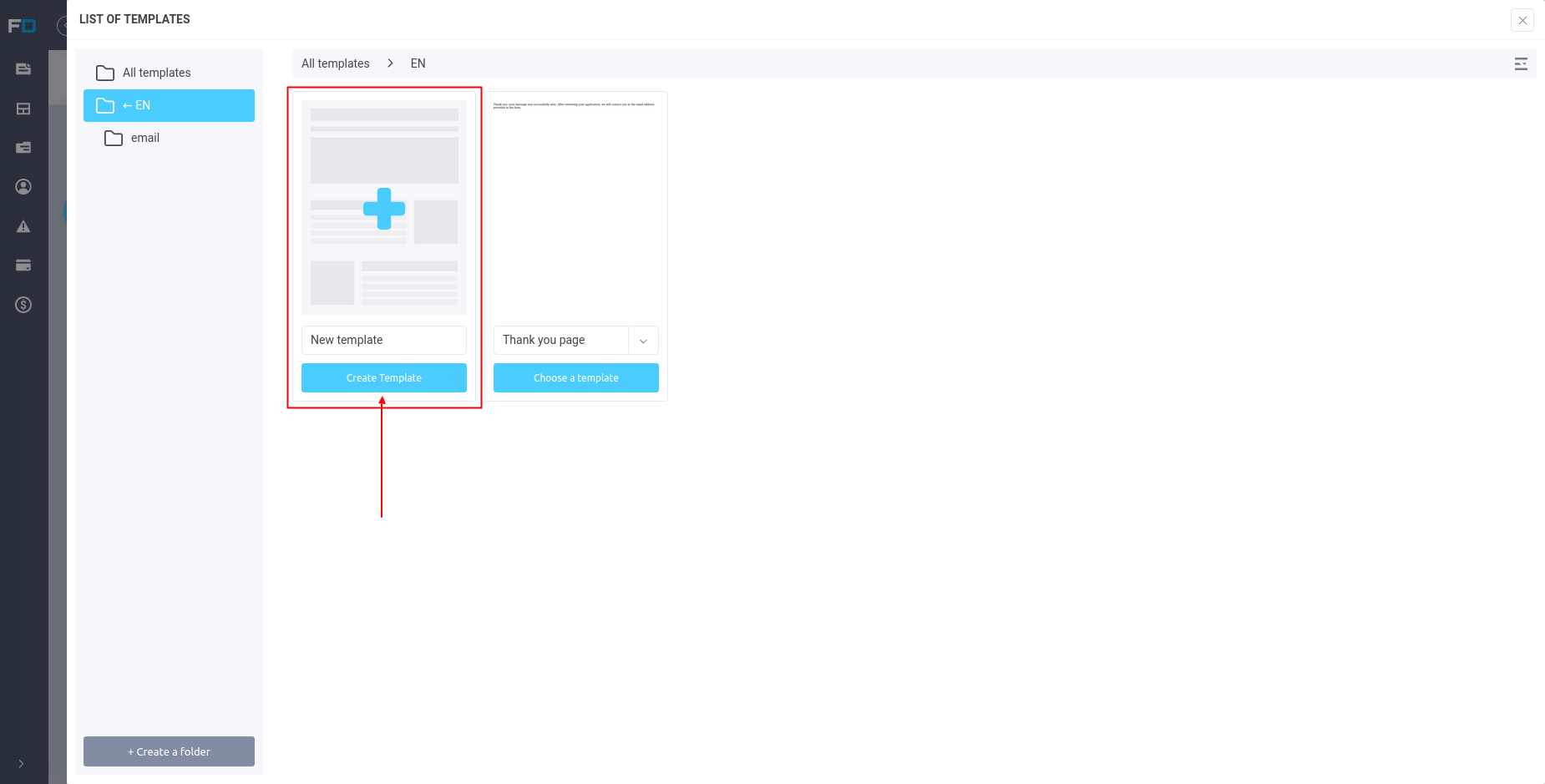
Pick the result template with Choose a template. A new template is built in the block editor, the simplified editor, or the HTML editor. Then click Choose a template again.
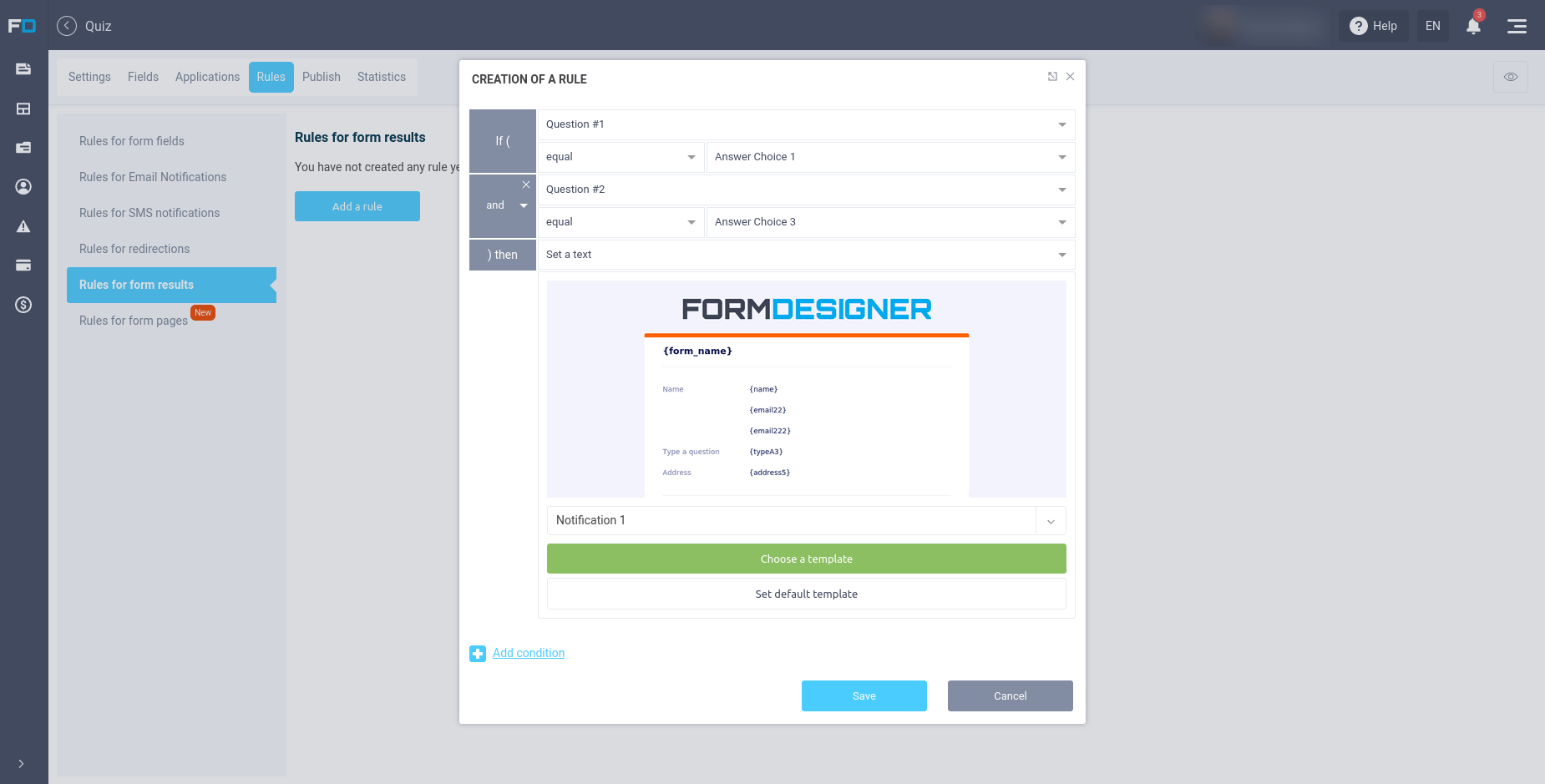
A different result for different answers
The same quiz can end on different screens. Open the Rules tab and choose Rules for form results.
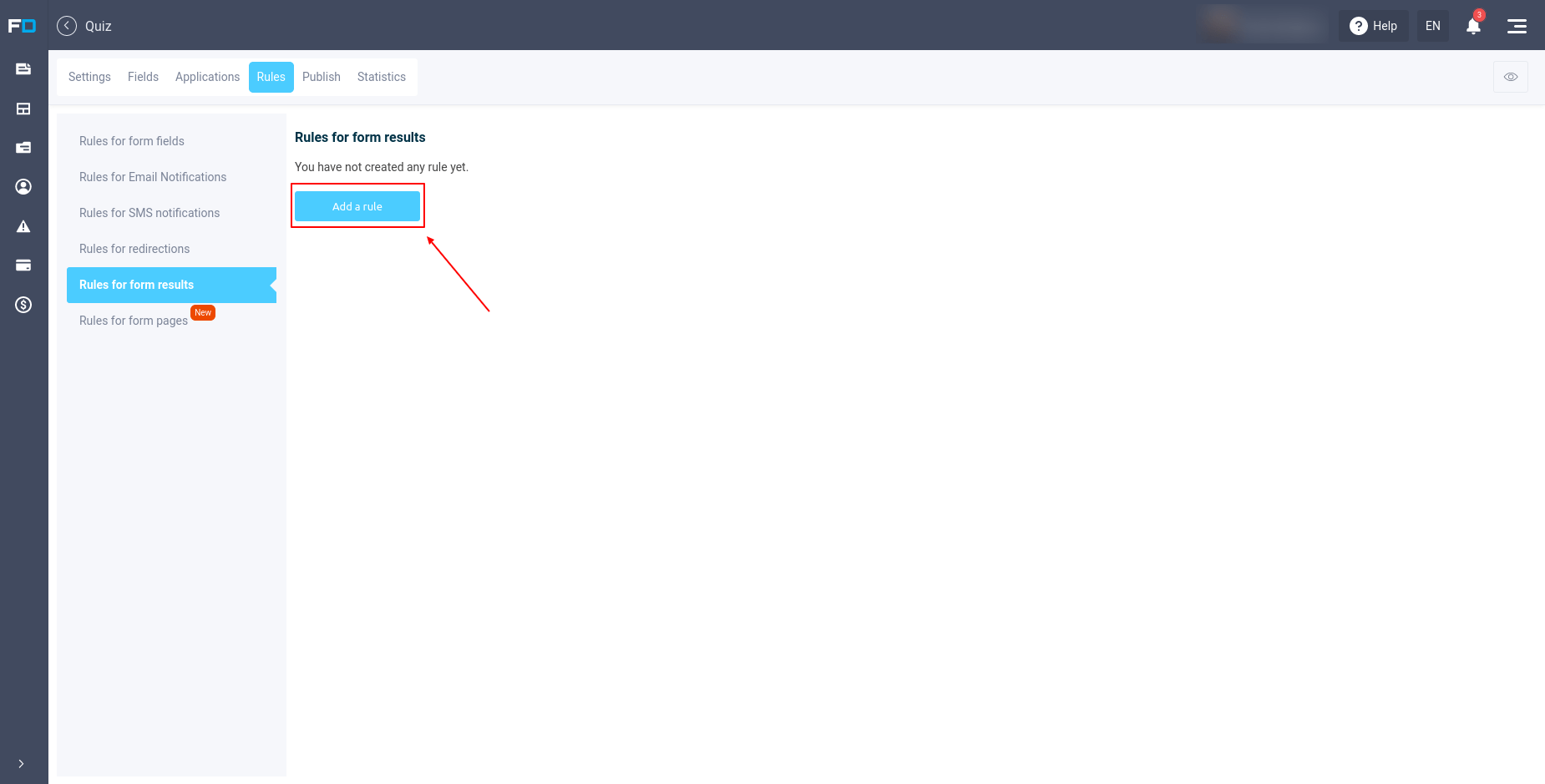
Add a rule pairs an answer condition with the template to show.
Embed code
Open Publish.
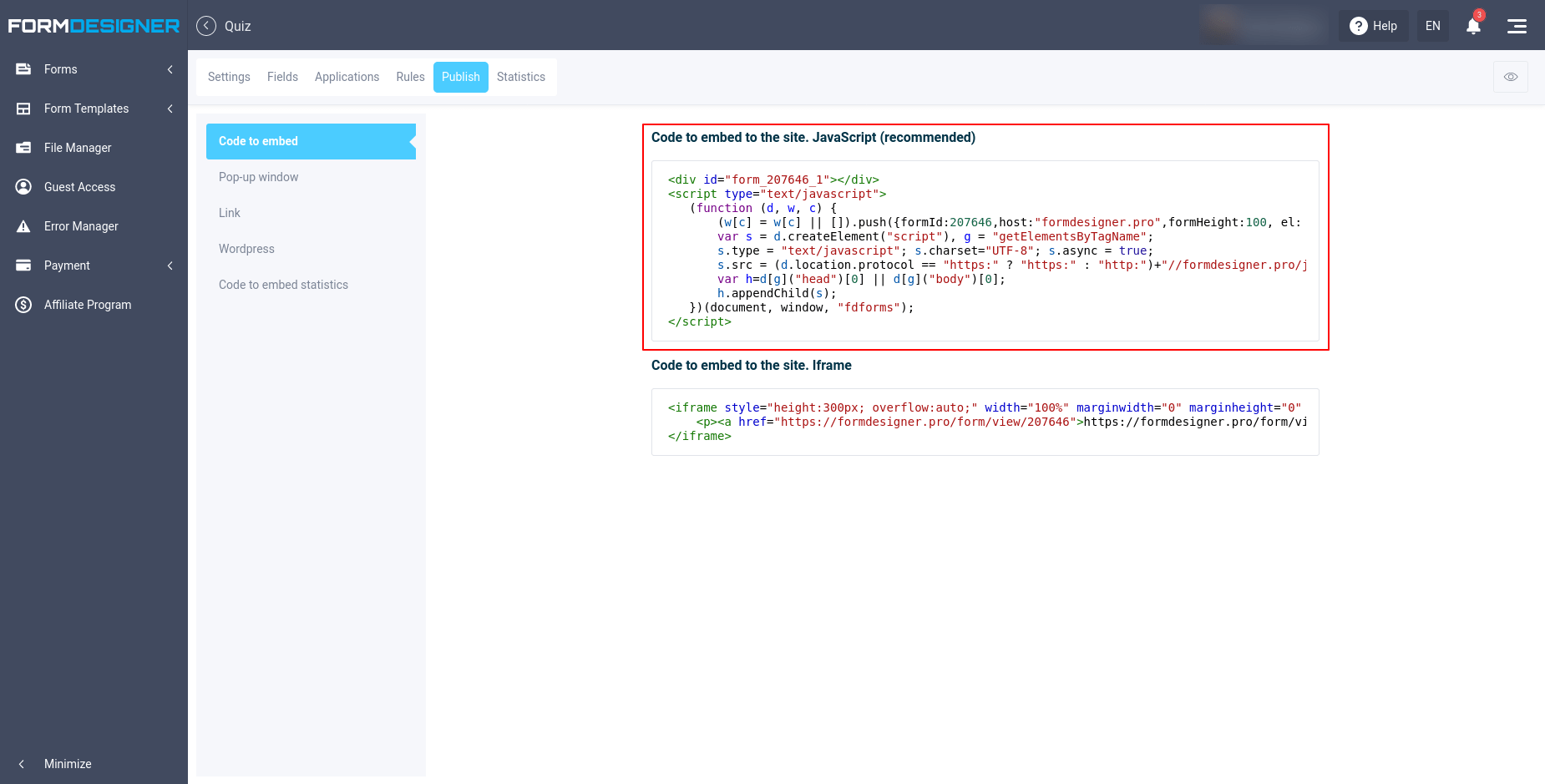
Paste the form’s JavaScript into the page. The same quiz can open from a direct link or in a popup — both are items in the left menu. Later edits happen in the account. You do not paste the code again.
Submissions
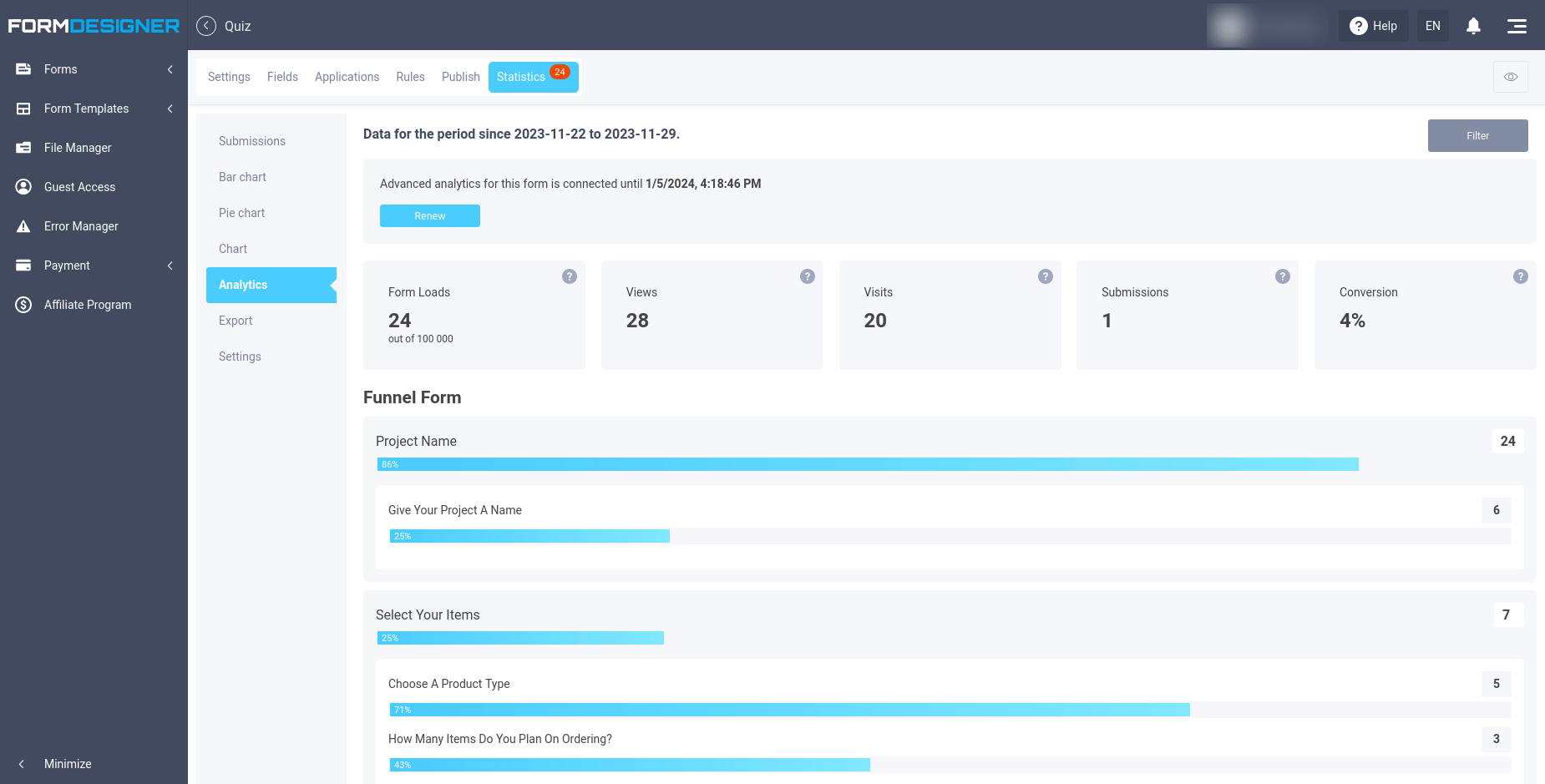
Answers are in the Statistics tab, under Submissions. Filter the table by date or search it.
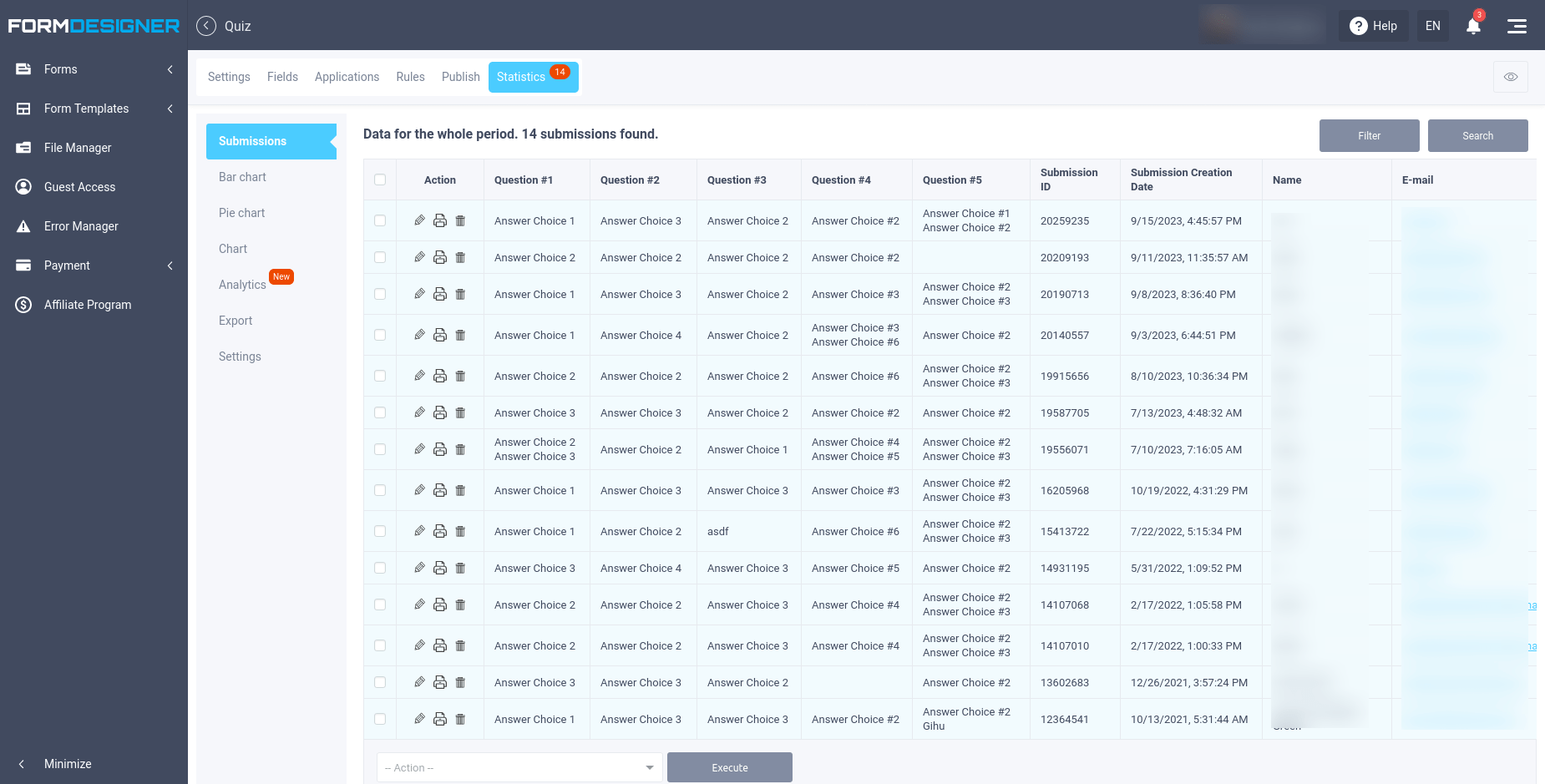
The bar chart and pie chart show how answers split.
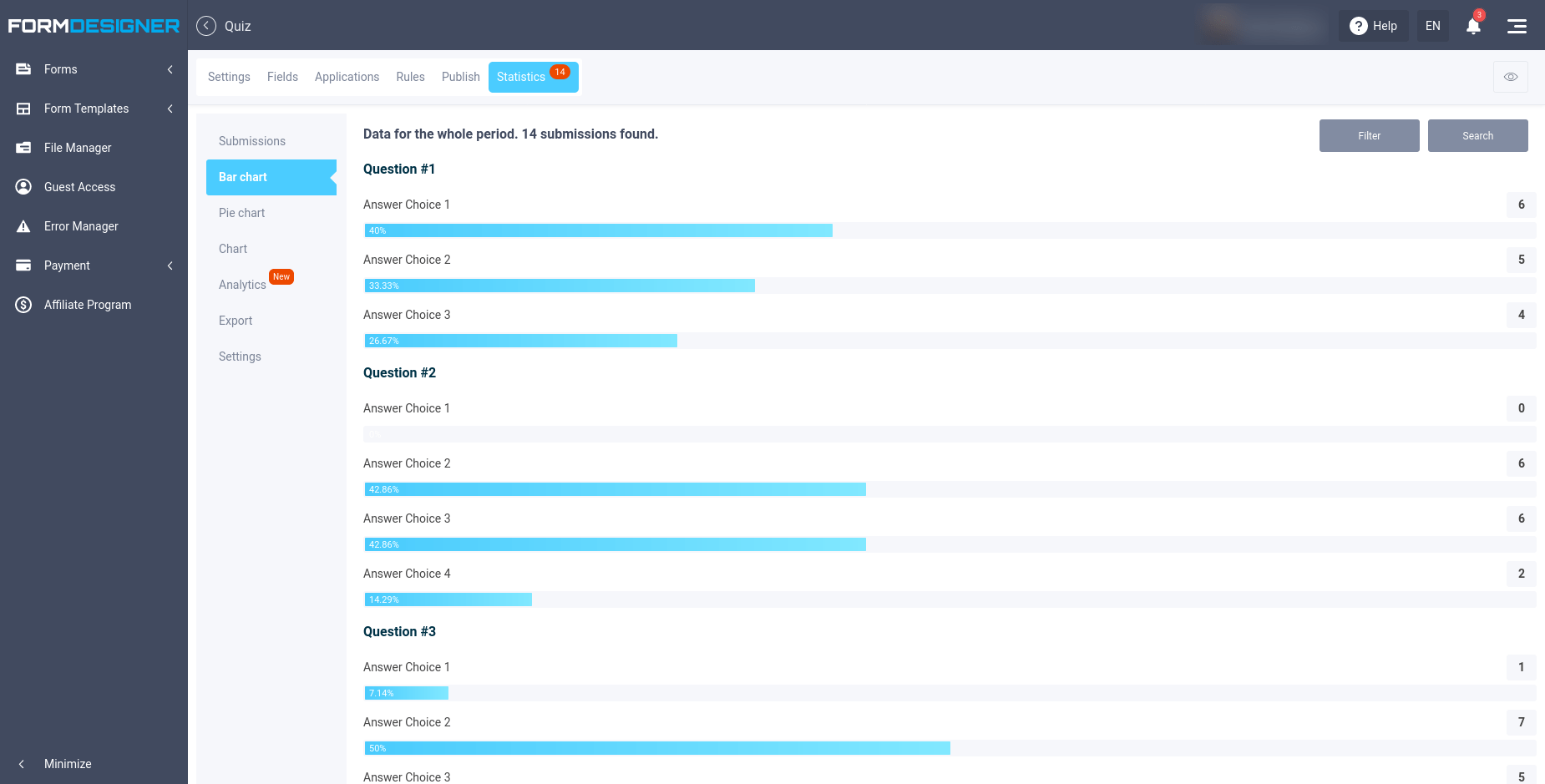
The funnel shows the question where people stop. Rewrite that question first.